Education is one of the few businesses in Pakistan where demand rises every single year and where a well-run campus becomes more valuable the longer it operates. That is why so many people, from property owners with an empty building to teachers who have spent twenty years in someone else's school, end up asking the same question: what would it actually take to open my own school?
This guide answers that honestly. It covers what the money really goes on, how registration works in Punjab under the current rules, what kind of building you need, and the decision most people get stuck on: whether to build an independent school from scratch or take a franchise from an established brand.
It is written by a school, so we have an interest here, and we will say plainly where that is. The section about our own franchise is clearly marked and sits near the end. Everything before it applies whichever route you choose.
What this guide covers
1. The two routes: independent or franchise
Every new school in Pakistan starts from one of two positions.
Independent. You register your own name, choose your own curriculum, hire your own team, and build parent trust from nothing. You keep every rupee of margin and answer to nobody. You also carry the full cost of every mistake, and in year one you are an unknown name competing against brands parents already recognise.
Franchise. You operate under an established name, using a curriculum, training system, and marketing approach that already works somewhere else. You pay a franchise fee up front and a royalty on revenue thereafter, and you accept limits on how you run the campus. In exchange, your first admissions season is dramatically easier, because parents have heard of you.
The scale of the franchise model in Pakistan is worth understanding before you dismiss it. Allied Schools has reported around 730 franchised campuses serving roughly 195,000 students, and The Educators, part of the Beaconhouse group, has reported around 700 campuses across more than 200 cities and towns. Those networks exist because the model solves the single hardest problem a new school has, which is persuading the first hundred families to take a risk on you.
The honest framing
A franchise is not a shortcut to profit. It is a way of buying down risk in year one and two, paid for with margin in year three onward. If you already know the sector well and have a name locally, independence may serve you better. If this is your first school, the training and the recognised name usually pay for themselves.
2. What it actually costs
There is no single number, and be sceptical of anyone who gives you one without asking about your building first. A pre-feasibility study published by the Government of Pakistan for a high school franchise put the total project cost at roughly Rs 5.8 million, split into around Rs 5.1 million of capital investment and Rs 0.7 million of working capital.
Treat that as a structure, not a quote. That study predates the last few years of inflation in construction, furniture, and salaries, so your own numbers will be higher. What it gets right is the proportions, and those are what you should plan against.
Where the money actually goes
- The building. Rent or purchase dominates everything else. Most first-time operators rent, precisely to avoid tying up capital in land before they know the catchment works.
- Fit-out and furniture. Classrooms, desks, boards, staff room, washrooms, and safety work. This is where costs quietly double if the building was not designed as a school.
- Labs and equipment. Computer and science provision, and increasingly a robotics or STEM room, which parents now actively shop for.
- Franchise fee. One-off, if you take that route.
- Working capital. The one people underestimate. You pay teachers from month one and reach a viable roll somewhere in year two. Budget the gap deliberately.
- Registration and compliance. Government fees, the building fitness certificate, and the physical changes inspection requires.
The number that matters most
Not the setup cost. It is how many months of full salary you can pay before fees cover them. Schools rarely fail because the fit-out was expensive. They fail because the founder ran out of cash in month nine of a fourteen-month ramp.
3. Registering a private school in Punjab
In Punjab, private schools register through PEPRIS, the Private Education Provider Registration and Information System, run by the School Education Department. The process moved online, so registration, renewal, and licensing are handled at pepris.pesrp.edu.pk rather than in person at district offices.
The broad sequence
- Submit the registration form on the PEPRIS portal with your school and premises details.
- A district education inspector visits and inspects the premises.
- You pay the registration fee.
- An E-License is issued, which is what makes the school legally operable.
Requirements introduced in 2026
The rules tightened, and several of the newer conditions carry real cost, so factor them in before you sign a lease rather than after:
- A building fitness certificate from the Communications and Works department.
- Disclosure of your fee structure.
- Admission of at least 10 percent of students from underprivileged backgrounds.
- Security cameras installed on the premises.
- Anti-dengue standard operating procedures and proper sanitation arrangements.
- For schools on main roads, zebra crossings and clear signage.
Verify before you budget
Registration rules change, and they differ by province. Confirm the current requirements and fees directly with PEPRIS on 042-111-11-20-20 or at pepris@punjab.gov.pk before committing to a building. Outside Punjab, your provincial education department sets its own process.
4. The building and the location
A common benchmark among franchisors is around two kanals for a full high school campus, though a primary-only campus works comfortably in considerably less. Do not over-fixate on the plot size. What determines whether a building works as a school is more specific:
- Usable classrooms. Count rooms that genuinely seat a class, not total rooms.
- Circulation and safety. Stairs, corridors, and exits that work when 300 children move at once.
- Outdoor space. Parents notice its absence immediately.
- Road access and parking. Drop-off congestion is a real reason families leave a school.
- Utilities. Electricity, internet, sewerage, and water, confirmed rather than promised.
On catchment, the honest test is simple: walk the two to three kilometres around your proposed site and list every school already operating, with their fee level. If three established schools serve the same families at a similar price, you need a clear reason for a parent to choose you. That reason is usually curriculum, facilities, or something specific such as a robotics programme, and it needs to be true rather than asserted.
5. Independent vs franchise, side by side
| Independent school | Franchise campus | |
|---|---|---|
| Up-front cost | No franchise fee | Franchise fee payable |
| Ongoing cost | None to a third party | Royalty on revenue |
| Brand recognition | Built from zero | Established from day one |
| Curriculum | You design or buy it | Provided and maintained |
| Teacher training | Your responsibility | Provided by the franchisor |
| Marketing | You build the system | Brand system supplied |
| Control | Total | Bounded by the agreement |
| Speed to fill classes | Slower | Usually faster |
| Best suited to | Experienced operators | First-time school owners |
6. How to judge a franchisor
Franchise selling and franchise supporting are different skills, and not every brand does both. Before you sign anything, get written answers to these:
- How many campuses have actually opened, as opposed to been sold? Ask for the operating number, not the network claim.
- What is my territory, defined precisely, and what stops another campus opening two kilometres away?
- What is the complete fee schedule? Franchise fee, royalty, renewal, training charges, materials, and anything billed later.
- What academic support arrives, and how often? A curriculum PDF is not support. Ask about training days, visits, and who to call in week three when a teacher resigns.
- Who sets fees at my campus, me or you?
- What are the exit terms if this does not work?
The single most useful thing you can do
Visit an existing campus of that brand unannounced, and speak to the operator without the franchisor present. Ask what they wish they had known. Ten minutes of that conversation is worth more than every brochure you will be sent.
7. The franchise process, step by step
Most established school franchisors in Pakistan run a broadly similar sequence. Knowing it in advance tells you whether a brand is being thorough or simply collecting a cheque:
- Enquiry. You register interest and share your city and building position.
- Presentation. A representative walks you through the academic model, support, and commercials.
- Site inspection. Their team visits the proposed building and surveys the catchment.
- Memorandum of understanding. Intent, territory, and campus scope agreed in writing.
- Setup brief. Layout, equipment schedule, staffing plan, and launch timeline handed over.
- Second facility visit. Confirmation that the building has been prepared to standard.
- Fee settlement. The balance of the franchise fee.
- Agreement signed. Territory, scope, brand rights, and academic obligations formalised.
- Onboarding. Teacher training, brand rollout, and admissions setup through to opening day.
A franchisor that skips the site inspection is telling you something important about how much they care whether your campus succeeds.
8. Mistakes that sink new schools
- Signing the lease before checking registration feasibility. If the building cannot pass a fitness certificate, the rent is already running.
- Budgeting setup but not the ramp. Salaries start before fees do. Model month by month to break-even, not to opening day.
- Choosing the site by rent alone. The cheapest building is often cheap because families do not live there.
- Underpaying teachers in year one. Parents judge a school by its teachers within a fortnight. This is the last place to economise.
- Promising facilities that do not exist yet. Parents tour the campus. The gap between the brochure and the building is the fastest way to lose a cohort.
- Opening with too many classes. Filling Pre-Nursery to Class 5 properly beats half-empty rooms up to Class 10.
Opening a London International School campus
About this section
This is the only part of the guide about our own franchise. Everything above applies whichever brand you choose, or none of them.
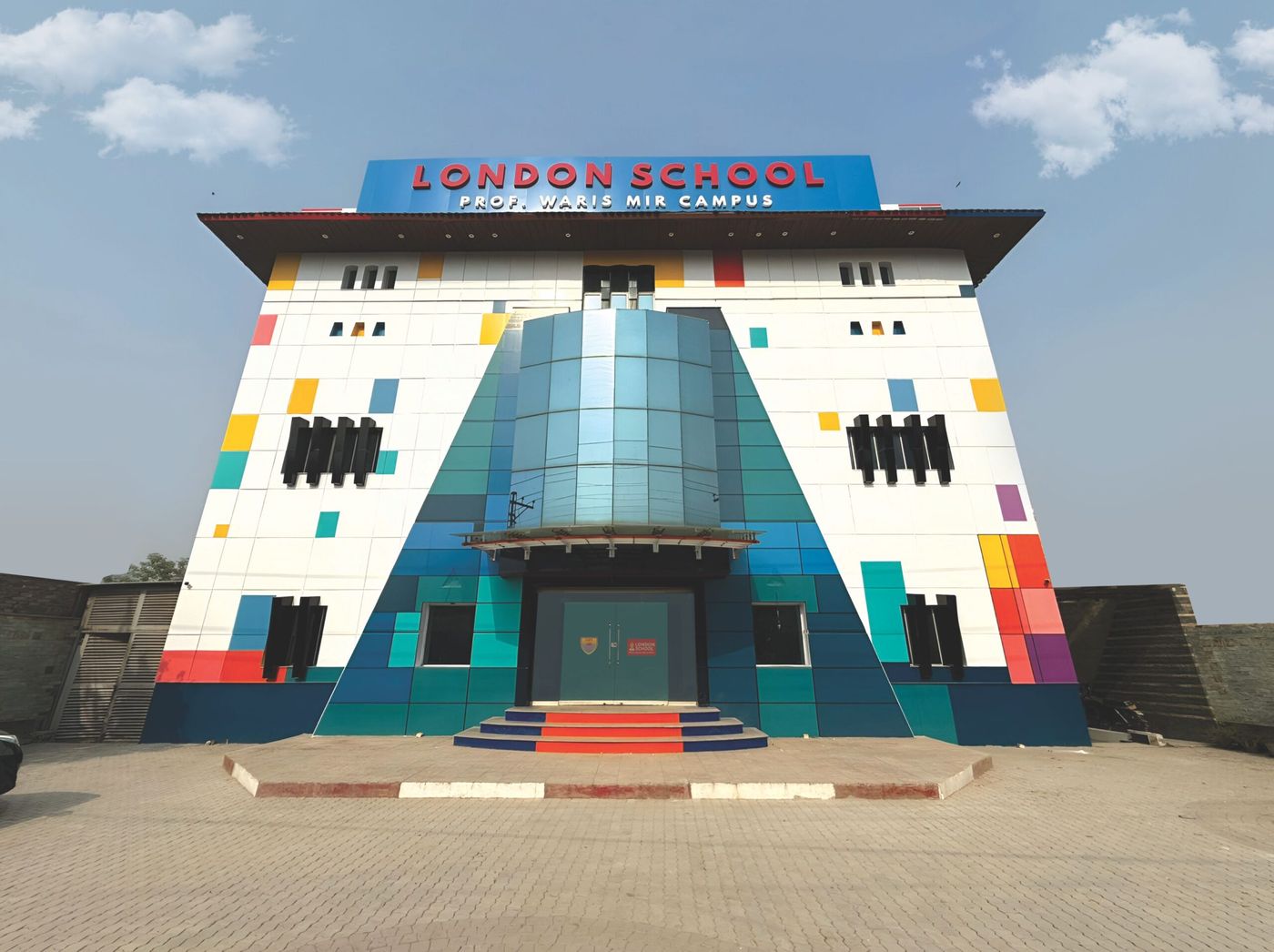
We are a Cambridge Pathway Registered school in Lahore, built on the legacy of Prof. Waris Mir, and our flagship Prof. Waris Mir Campus currently runs Pre-Nursery through Class 7, adding a year as each cohort progresses.
What we offer partners is the thing parents in every city are now asking about: AI and Robotics from age 3, taught on an age-graded path, alongside the Cambridge framework. Partner campuses are available at Primary and Secondary level, as new campuses or as conversions of established schools.
We do not publish a franchise fee, because the honest answer depends on your campus type, your building, and whether you are converting or starting fresh. Share your plans and we will send the commercial detail relevant to your case.
Thinking about a campus in your city?
See the full franchise model, the support we provide, and the nine-stage process, or send an application straight to our team on WhatsApp.
Explore the FranchiseFrequently asked questions
How much does it cost to open a school in Pakistan?
It depends on whether you rent or buy, the campus size, and whether you go independent or take a franchise. A government pre-feasibility study for a high school franchise put the total project cost at roughly Rs 5.8 million, split between capital investment and working capital, but that figure predates recent inflation and should be treated as a starting point for your own costing rather than a current quote. The largest variables are rent or land, fit-out and equipment, and the salary bill for your first year before enrolment covers it.
How do I register a private school in Punjab?
Registration runs online through PEPRIS, the Private Education Provider Registration and Information System operated by the Punjab School Education Department. You submit the form at pepris.pesrp.edu.pk, a district education inspector inspects the premises, you pay the registration fee, and an E-License is issued. Since 2026 the process also requires a building fitness certificate from the Communications and Works department. Confirm current requirements with PEPRIS before you budget or sign a lease.
How big does a school building need to be?
There is no single national figure, and it depends on the levels you intend to run. As a common market benchmark, many franchisors look for around two kanals for a full high school campus, while a primary-only campus works in significantly less. The practical constraints are usable classroom count, safe circulation, outdoor space, and road access rather than the plot size on paper.
Is a school franchise better than starting independently?
A franchise gives you a recognised name, a ready curriculum, teacher training, and a marketing system, which shortens the time to fill your first classes. The trade-offs are the franchise fee, an ongoing royalty, and less freedom over how you run the campus. An independent school keeps all the margin and all the control, but you build curriculum, brand, and parent trust from zero. Franchising usually suits first-time operators; independence suits those who already know the sector.
What should I check before signing a franchise agreement?
Get the territory definition in writing, the full fee schedule including royalty and renewal charges, exactly what academic and training support is provided and how often, who controls fee-setting at your campus, the exit terms, and how many campuses the franchisor has actually opened rather than sold. Visit an existing campus unannounced and speak to that operator directly.
Can I convert my existing school into a franchise campus?
Yes, and conversions are common. Most franchisors will review your enrolment, building, and staffing, then set out what changes under their academic system, including curriculum, teacher training, branding, and reporting. Conversion often reaches break-even faster than a new campus because you begin with students already enrolled.