Cambridge Pathway · International School in LahoreCambridge Pathway School
Pakistan's Most Advanced AI & Robotics ProgrammeAI & Robotics from Age 3
Two US Coding Certifications at KindergartenUS Coding Certs at KG
Built on the Legacy of Prof. Waris MirProf. Waris Mir Campus
Admissions Open
Home About Us Academics Virtual Tour News Parent Guides Ask Prof Mir Admissions Contact Us Book a Visit
HomeAI & Robotics
Pakistan's Most Advanced Early Robotics Programme

AI & Robotics at London School. From age three — to university-ready.

An age-graded pathway through Class 7 (with Class 8 launching 2026–27), integrated with the Cambridge curriculum. Every student earns two early coding certificates from our US-based curriculum partner at Kindergarten — no other school in Pakistan starts this early.

Cambridge Pathway Registered · 200+ students enrolled for 2025–26

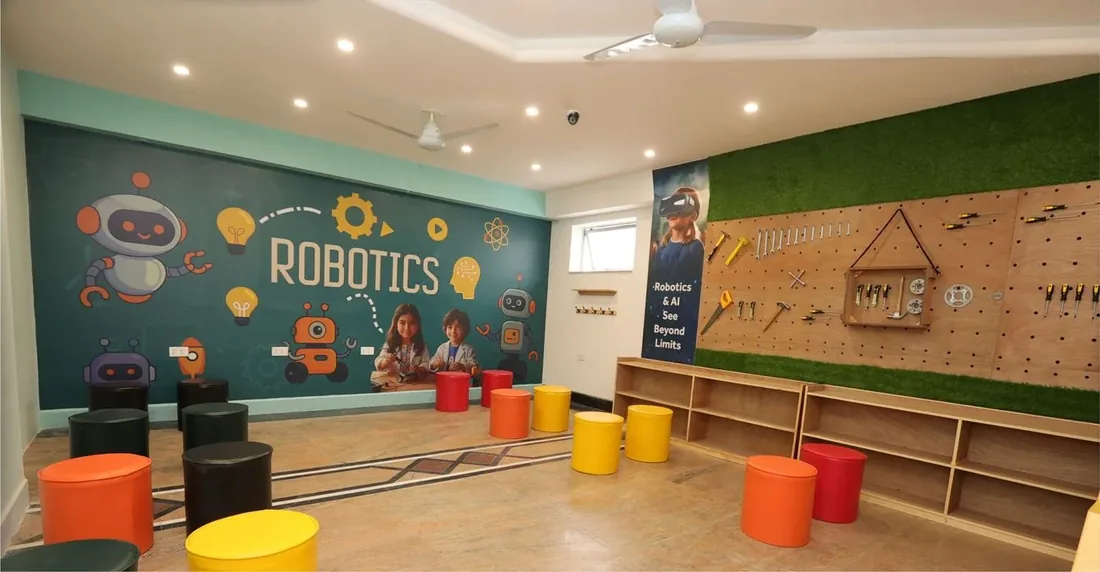
Students at London School's purpose-built Robotics Lab, with LEGO Mindstorms and Arduino equipment
2 US Coding Certs Earned at Kindergarten
From Age 3 Pre-Nursery to Class 7

The AI and Robotics programme at London School — Prof. Waris Mir Campus is an age-graded path that begins at Pre-Nursery (age 3) and runs through Class 7, with Class 8 launching in 2026-27. Children start with play-based digital literacy, move into block-based coding in Scratch, then earn two early coding certificates at Kindergarten through our US-based curriculum partner. From Class 1 onwards, students build with LEGO Mindstorms, then progress to Arduino microcontrollers in middle years, and finish with 3D printing and applied AI projects by Class 7. The programme is delivered in person at our Lahore campus and is integrated with the Cambridge International curriculum. There is no open chatbot in early years; all AI activity is teacher-led and age-appropriate.

2
Early coding certificates at KG
Earned at Kindergarten
9yrs
Of progressive learning
Pre-Nursery (age 3) to Class 7
100%
Of students take part
Not an elective
Cambridge
Pathway integrated
At every stage
Our philosophy

Why we start AI education at age three

The children beginning school in 2025 will retire in the 2080s. The most certain prediction we can make about their working lives is that they will be defined by decisions made alongside artificial intelligence: in medicine, engineering, design, law, and every field in between.

Teaching children to think with AI at age three is not about making them programmers. It is about making them comfortable with the technology that will shape their entire lives, so they grow up directing it instead of being directed by it.

This philosophy sits naturally alongside the inspiration behind our school, Prof. Waris Mir, whose belief that the purpose of education is "not to fill minds, but to open them" shapes everything we do. Our AI and robotics programme opens minds to what is possible, one developmentally appropriate stage at a time.

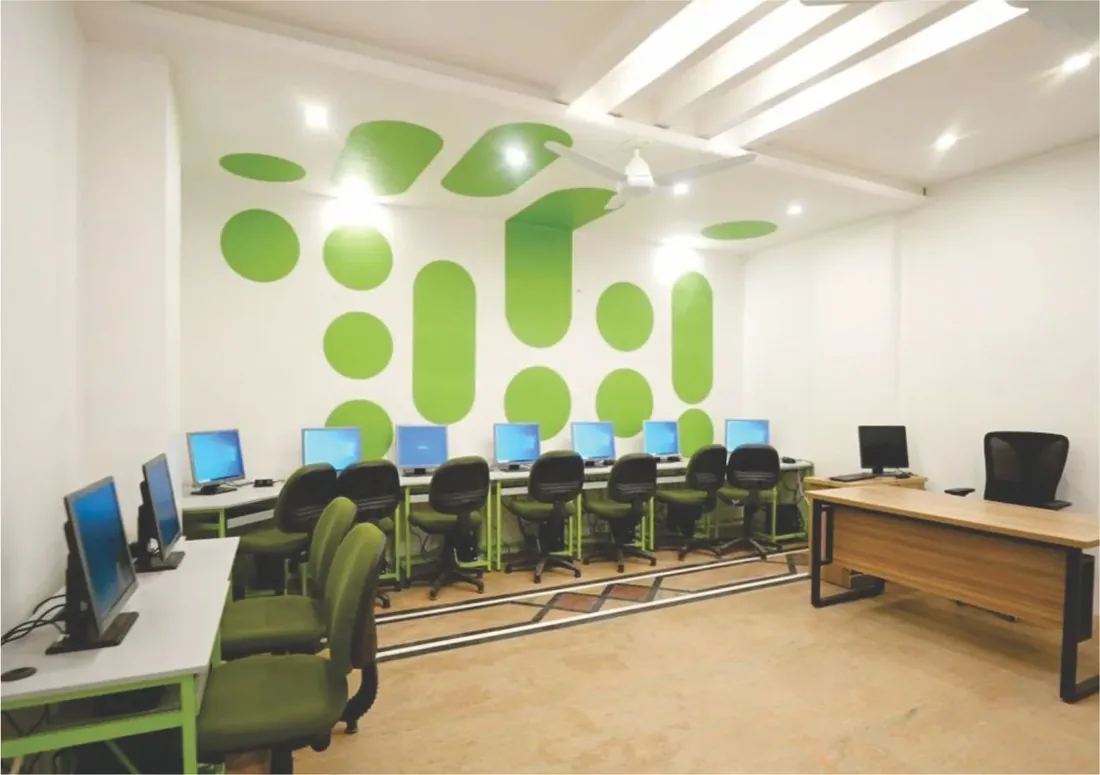
Young students at the London School AI lab, working with teachers on age-appropriate coding activities
The ten-year path

From curious three-year-old to first invention

Each stage is developmentally matched to what children can do, want to do, and will need next. Nothing is rushed. Nothing is skipped.

3–4 yrs
Pre-Nursery and Nursery

Pre-Years: curious about computers

In their very first classroom, children are introduced to computers, AI and coding through play. The goal is not productivity. It is comfort: three and four year olds build confidence with technology, learn how it works, and start asking the curious questions that will carry them through a decade of study.

  • Digital literacy: how computers listen, look and respond
  • Play-based coding with colourful block-based tools
  • Teacher-led "how does this work?" sessions, age-appropriate
A parent told us

"My daughter comes home asking how the computer knows her name. Now she asks us better questions, too."

6–8 yrs
Classes 1–3

Early primary: first real robots

With the foundational thinking in place, children move from screen to physical world. Using LEGO Mindstorms kits, students design robots that actually move, sense, and react. The goal at this age is ownership: every child builds their own robot, names it, and demonstrates it to the class.

  • LEGO Mindstorms: design, build, and program moving machines
  • Circuit design and simple automation
  • Student-led classroom demonstrations by Class 3
A Class 2 parent

"He built a robot that sorts his LEGO by colour. I'm an engineer; I didn't do this until university."

9–11 yrs
Classes 4–6

Upper primary: real engineering

Now students move to the tools real engineers use. Arduino microcontrollers, ultrasonic and temperature sensors, motors and servos: the same components you would find in a university first-year engineering course. Projects shift to "build a thing that solves a problem at home", door alarms, plant-watering systems, light-tracking models.

  • Arduino boards with live sensors: industry-standard equipment
  • Circuit-to-problem engineering projects
  • Inter-class robotics competitions each term
A Class 5 parent

"My daughter isn't just using technology. She's the one deciding what it does."

12–14 yrs
Class 7 · Class 8 coming 2026–27

Lower secondary: invention-ready

By Class 7, our students have six years of hands-on technical experience behind them. This is where that experience compounds: they begin combining 3D-printed parts with Arduino circuits and AI-generated designs to create genuinely original prototypes. Class 8 launches in the 2026–27 academic year as our Class 7 cohort progresses, completing our Lower Secondary Cambridge pathway.

  • 3D printing integrated with AI-assisted design
  • National-level robotics and invention competitions
  • University-ready portfolios as Lower Secondary completes

Ready for the world

Cambridge Pathway · AI fluency · original prototypes · a portfolio of work no other Pakistani primary school can match.

Honest comparison

How our programme compares

Most schools in Pakistan teach robotics as an after-school club or offer coding as a Class 6+ subject. Here is what that looks like side by side.

Typical private school London School
AI introductionClass 9 or laterAge 3 (Pre-Nursery)
First coding lessonClass 6–7Kindergarten
Early coding certificates (US partner)Not offeredTwo, by age 5
Physical roboticsAfter-school clubCore curriculum from Class 1
Arduino / real sensorsClass 9+ (if at all)Class 4
3D printing accessRareClass 7 standard
ParticipationA few selected studentsEvery student, every year
Cambridge curriculumSubject-onlyIntegrated with tech pathway
What parents notice first

The shift you'll see at home

A few patterns parents tell us about most often, after their child has been on the AI & Robotics programme for a term or two. Real parent quotes are coming as our first cohort of families opt in. Until then, here's what we hear repeatedly during pickup conversations.

By the end of Kindergarten, every child earns two early-coding qualifications mapped to the US K-12 Computer Science Framework. Most parents tell us they have to explain what that means to grandparents more than once.
What we hear from KG parents
Children build their first working robot in Class 2, typically a colour-sorting LEGO Mindstorms project. Engineer parents are usually the most surprised: they didn't see the equivalent until university.
What we hear from Primary parents
By Class 5, the shift parents describe most often is from "using technology" to "deciding what technology does." It's the posture change, not just the skill, that they say will compound for years.
What we hear from Middle parents
Parent questions

About our AI & Robotics programme

At what age does AI and robotics education start at London School?

AI-based learning begins at Pre-Nursery (age 3) with age-appropriate digital literacy and play-based coding on colourful block-based tools. Formal coding starts at Kindergarten (age 5), where every student earns two early coding certificates issued by our US-based curriculum partner. Physical robotics with LEGO Mindstorms begins in Class 1 (age 6).

Which coding certificates do students earn at Kindergarten?

Our programme delivers two American-certified early coding qualifications covering block-based programming (Scratch) and introductory Python concepts, assessed and certified by recognised US coding authorities. Every Kindergarten student who completes the year earns both.

Is AI learning safe for a three-year-old?

Yes. At Pre-Nursery and Nursery, AI-based learning is introduced through teacher-led activities, play-based coding with colourful digital blocks, and age-appropriate conversations about how technology works. There is no open chatbot, no personal data collected, and every activity is fully supervised by qualified early-years teachers.

What robotics equipment do you use?

Our purpose-built Robotics Lab includes LEGO Mindstorms kits (Classes 1–3), Arduino microcontrollers with live sensors (Classes 4–6), and 3D printers with AI prototyping tools (Class 7; Class 8 from 2026–27). Equipment is replaced each year to match the latest industry-standard hardware.

How is this different from an after-school coding bootcamp?

A bootcamp teaches a skill in a few weeks. Our programme is a ten-year integrated pathway: coding, robotics and AI concepts are woven into every subject (maths, science, even English) and mapped to the Cambridge curriculum. Students build cumulative mastery, not isolated skills.

Does every student take part, or is it optional?

Every student at London School participates in the AI and robotics programme. It is a core part of the curriculum, not an elective. The two coding certificates in Kindergarten are guaranteed for every student who completes the year, not just a selected few.

What does the programme look like by Class 7?

By Class 7, students have built five years of hands-on technical experience across Scratch, LEGO Mindstorms, Arduino microcontrollers, 3D printing, and applied AI projects. They earn two early coding certificates at Kindergarten through our US-based curriculum partner and complete an age-graded portfolio of original prototypes. Class 8 launches in 2026-27 as the current Class 7 cohort progresses.

Watch your child step into the Robotics Lab

Book a free 45-minute campus visit. Your child tries the Robotics Lab, explores our AI and coding classrooms, and meets the teachers. You leave with a clear picture.