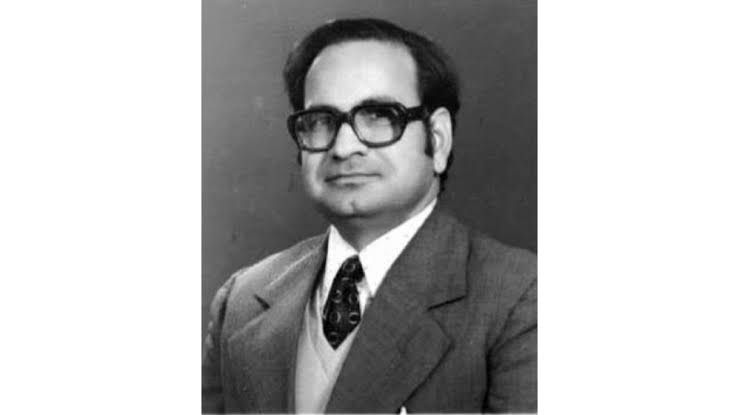
Most people who type "waris mir" or "hamid mir father name" into Google are looking for the same simple answer: who was he, what did he do, and why is his name on a school. This article gives the direct answer first, then the longer story for readers who want it.
- Full name
- Professor Waris Mir
- Born
- 1938, Punjab, Pakistan
- Died
- 9 July 1987, Lahore, Pakistan
- Known for
- Journalism, academia, free-press advocacy under Zia-ul-Haq
- Profession
- Professor of Mass Communication, University of the Punjab
- Newspaper
- Long-running columnist for Daily Jang
- Education
- University of the Punjab; City, University of London
- Award
- Hilal-e-Imtiaz (posthumous), Government of Pakistan
- Famous son
- Hamid Mir, host of Capital Talk, Geo News
The direct answer in one paragraph
Prof. Waris Mir (1938–1987) was a Pakistani journalist and academic. He was a Professor of Mass Communication at the University of the Punjab in Lahore, a long-running columnist for Daily Jang, and one of the most outspoken Pakistani writers on press freedom and democracy during General Zia-ul-Haq's martial law in the 1980s. The Government of Pakistan awarded him the Hilal-e-Imtiaz posthumously for his contribution to journalism and education. He is also widely remembered as the father of senior Pakistani journalist Hamid Mir, the host of Capital Talk on Geo News.
Early life and education
Prof. Waris Mir was born in 1938 in Punjab, in what was then British India and what would become Pakistan a decade later in 1947. He grew up in the post-Partition Punjab and pursued his education at the University of the Punjab in Lahore, the institution he would later return to as a faculty member.
Mid-career, he travelled to the United Kingdom for advanced training in journalism at City, University of London, one of the leading institutions for journalism education in Europe at the time. The exposure to Western press traditions and the practical craft of newsroom journalism shaped his later work as both a practitioner and a teacher of the field.
Career as a journalist
Back in Pakistan, Prof. Waris Mir became one of the most read columnists of his generation. His regular column in Daily Jang, the largest-circulation Urdu newspaper in Pakistan, gave him a national audience week after week. He also wrote for the English-language press, often on the same themes from a different angle.
His writing covered a wide range of subjects but kept returning to a few core ideas: the importance of a free press for a young democracy, the case for constitutional rule, the role of universities in producing critical citizens, and the human cost of military rule. He wrote about Pakistani politics, education policy, and the social pressures on young people growing up in a censored public sphere.
He was unusual among Pakistani journalists of his era in two ways. First, he combined a working journalist's instinct with the rigour of an academic — his columns cited evidence and structured arguments more carefully than the prevailing style. Second, he kept writing under General Zia-ul-Haq's martial law from 1977 onwards, at a time when many writers chose silence or exile. His columns from this period are still cited in Pakistani journalism schools as an example of writing critically without being shut down.
Career as an academic
Alongside his journalism, Prof. Waris Mir built a long career at the University of the Punjab in Lahore. He rose to lead the Mass Communication department, the institution responsible for training a generation of Pakistani journalists, broadcasters, and communications professionals. Many senior names in Pakistani journalism today studied under him or were taught by his former students.
His teaching combined press history, theory, and craft. Students who passed through the department in the 1970s and 1980s describe a teacher who insisted on clarity of argument, scepticism of authority, and respect for evidence — the same standards he applied to his own column.
The Zia-ul-Haq years and press freedom
The defining context of Prof. Waris Mir's later career was General Muhammad Zia-ul-Haq's military rule, which began with a coup in July 1977 and continued until Zia's death in 1988. The Zia government imposed press censorship, jailed journalists, and pressured publications to align with its programme.
Prof. Waris Mir was one of the writers who kept publishing critical work through this period, particularly on the themes of democracy, civilian rule, and press freedom. He was internationally noted for this writing, with mentions in foreign press accounts of Pakistan's journalism scene during the 1980s. His position as a professor at a state university and a columnist at the largest Urdu newspaper gave him a platform that was difficult for the state to silence outright without significant cost.
He did not see himself as an activist. His own self-description was that of a journalist and teacher writing about the things journalists and teachers should write about — and he treated the political pressure of the time as the cost of doing the job properly.
Death and legacy
Prof. Waris Mir died on 9 July 1987 in Lahore. He was 49 years old. The cause was a heart attack. He left behind his wife, his children including his elder son Hamid, and a body of journalism and academic work that has continued to be read and cited in the decades since.
In recognition of his contribution to journalism, education, and free-press advocacy, the Government of Pakistan awarded him the Hilal-e-Imtiaz — the country's second-highest civilian honour — posthumously.
The Mir family today
Prof. Waris Mir's eldest son, Hamid Mir, became one of Pakistan's most recognisable journalists. He hosts Capital Talk, the long-running current-affairs programme on Geo News, and is widely known for his interviews with Pakistani and international leaders. He has spoken publicly across his career about the influence of his father's work on his own approach to journalism — particularly the insistence on covering politics critically and the conviction that a free press is worth the personal cost it sometimes carries.
Other members of the Mir family carry the legacy forward in different fields. Prof. Waris Mir's daughter Huma Mir is a Director at the school named after her father in Lahore, and his granddaughter Zoya Mir is also a Director on the leadership team.
The school named in his honour
About this section
This is the only part of the article that connects to our own school. The biography above stands on its own.
London International School — Prof. Waris Mir Campus is a Cambridge Pathway Registered school in Lahore that opened in 2025, named in honour of Prof. Waris Mir. The school is on Ali Road, opposite Ideal Park Township, and runs Pre-Nursery through Class 7, with Class 8 launching in 2026–27. Its leadership team is CEO Naveela Choudhary and Directors Huma Mir and Zoya Mir.
The school carries his name as an acknowledgement of two things he stood for: the importance of education as a public good, and the value of teaching young people to think clearly. Whether or not your child eventually studies here, his story is part of Pakistan's journalism and education history — and worth knowing for its own sake.
Further reading
- Prof. Waris Mir biography on our site — longer-form biography page with detailed structured data.
- Hamid Mir on Wikipedia — the eldest son's career and life.
- Daily Jang archives (1970s and 1980s columns) — the original published work, accessible through Pakistani journalism libraries.
Visit the campus named for him
If you are exploring schools in Lahore and want to see the campus that carries his name, our admissions team books Thursday tours on Ali Road, opposite Ideal Park Township.
Visit the Campus on WhatsAppFrequently asked questions
Who was Prof. Waris Mir?
Prof. Waris Mir (1938-1987) was a Pakistani journalist, academic, and Professor of Mass Communication at the University of the Punjab in Lahore. He was a long-running columnist for Daily Jang and is best known for his free-press advocacy during General Zia-ul-Haq's martial law in the 1980s. He was awarded the Hilal-e-Imtiaz posthumously.
Who is Hamid Mir's father?
Hamid Mir's father is Prof. Waris Mir (1938-1987), a Pakistani academic and journalist. He was a Professor of Mass Communication at the University of the Punjab and a columnist for Daily Jang, internationally noted for his free-press writing under General Zia-ul-Haq. He passed away in 1987.
What was Prof. Waris Mir known for?
His academic career at the University of the Punjab, his journalism (particularly his Daily Jang column), and his outspoken advocacy for press freedom and democracy during Zia-ul-Haq's martial law.
Where did Prof. Waris Mir study?
The University of the Punjab in Lahore for his early degrees, and later City, University of London in the UK for journalism training.
Is there a school named after Prof. Waris Mir?
Yes. London International School - Prof. Waris Mir Campus is a Cambridge Pathway Registered school in Lahore, opened in 2025, named in his honour. It is on Ali Road, opposite Ideal Park Township.