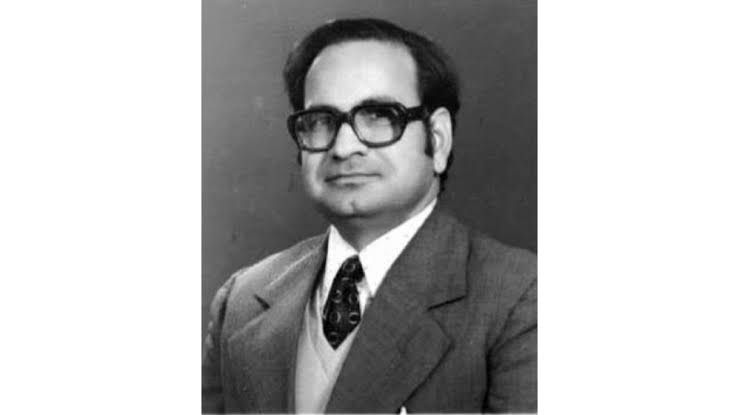
Pakistani journalist, academic, and professor of Mass Communication at the University of the Punjab. Internationally remembered for his fearless free-press advocacy and democracy writing during the years of General Zia-ul-Haq's martial law.
Father of Pakistani television journalist Hamid Mir. Awarded the Hilal-e-Imtiaz posthumously by the Government of Pakistan. The campus of London International Education System in Lahore is named in his honour.
Born
1938, Punjab, Pakistan
Died
9 July 1987, Lahore
Profession
Journalist, columnist, professor
Held position at
University of the Punjab, Lahore
Best known for
Daily Jang columns; free-press writing under Zia-ul-Haq
Award
Hilal-e-Imtiaz (posthumous)
Early life and education
Waris Mir was born in 1938 in undivided Punjab, in the years immediately before Partition. He grew up through the formative decade of the new Pakistani state and went on to study at the University of the Punjab in Lahore, where he later returned as a faculty member. Contemporaries describe a young man drawn equally to language and to public argument, traits that would define both his teaching and his journalism.
He pursued further studies abroad, including time at City, University of London, returning to Pakistan with a comparative view of mass communication that was unusually international for his generation. That cross-cultural training is part of what made his later columns recognisable: arguments grounded in history, political theory and constitutional precedent rather than slogans.
Academic career at Punjab University
For most of his working life, Waris Mir was a Professor of Mass Communication at the University of the Punjab, the country's oldest and largest public university. He helped shape a generation of Pakistani journalists, broadcasters and academics from the Department of Mass Communication, including students who later went on to lead newsrooms in Karachi, Islamabad and Lahore.
His teaching emphasised three things students still recall: the duty of the press to question power, the ethical obligation to report accurately even when inconvenient, and a comparative reading of how free societies build the institutions that protect speech. He insisted that journalism is a discipline, not a hobby — a stance unusual in a national context where reporters were often trained on the job rather than in classrooms.
Journalism and the Daily Jang columns
Alongside his university career, Waris Mir wrote regularly for Daily Jang, then and now Pakistan's largest-circulation Urdu newspaper. His column was political, often constitutional, and read closely by politicians, generals and civil servants alike. He wrote in plain Urdu about complicated ideas: separation of powers, the rule of law, democratic transition, the role of the media in a Muslim-majority state.
Two qualities set the columns apart. First, he treated his readers as intelligent equals; he never wrote down. Second, he refused the safe centre of public discourse. When he believed a position was wrong — whether it came from the government, the religious establishment, or the political opposition — he said so on the page, with reasoning a reader could test.
Writing under Zia-ul-Haq's martial law
Waris Mir's reputation was forged in the most difficult decade for Pakistani journalism: the military rule of General Muhammad Zia-ul-Haq, from 1977 to 1988. Press censorship was formal and informal, newspapers were shut, journalists were detained, and entire op-ed pages were left blank under censor instructions. In that climate, public defence of democratic institutions carried real personal cost.
He argued, in column after column, that Islam and democracy were compatible — a position that put him at odds with the official Islamisation programme of the Zia state. He wrote against the suspension of fundamental rights, against the politicisation of the judiciary, and in defence of women's legal status at a time when proposed laws threatened to roll it back. The work made him admired by readers and watched by authorities. He continued writing.
It is this period that explains why his name still carries weight in Pakistani public memory: he was not a journalist in calm times. He was a journalist when journalism was punished.
"The pen, when it is honest, is the first institution a free society builds, and the last one a tyranny manages to silence."
— A line attributed to Prof. Waris Mir, often cited by his students
Family and the Mir name today
Waris Mir's family has remained closely tied to Pakistani public life. He is the father of:
Hamid Mir — one of Pakistan's best-known television journalists, host of Capital Talk on Geo News, and a public commentator on politics and security.
Huma Mir — a Director of London School — Prof. Waris Mir Campus, working to carry her father's educational vision into a new generation.
His granddaughter Zoya Mir also serves as a Director of the school, ensuring that the Mir family's work in journalism, scholarship and education continues into a third generation.
Legacy and posthumous recognition
Prof. Waris Mir died on 9 July 1987 in Lahore, at the age of 49. His death came midway through Zia-ul-Haq's rule, and is commemorated annually by Pakistani journalists and free-speech advocates. The Government of Pakistan later awarded him the Hilal-e-Imtiaz, one of the country's highest civilian honours, in posthumous recognition of his contributions to journalism and academia.
His writing is still cited in the work of contemporary Pakistani columnists and is studied in mass communication departments across the country. The annual remembrance of his death has become, for two generations of Pakistani journalists, a way of restating their commitment to the values he wrote about: a press answerable to its readers, a state answerable to its citizens, and a public sphere where ideas can be argued in the open.
The school named in his honour
London School — Prof. Waris Mir Campus in Lahore opened in 2025 to carry his educational vision into early childhood and primary schooling. The school runs the Cambridge Pathway from Pre-Nursery to Class 7, with Class 8 launching in 2026–27, and integrates an AI & Robotics programme from age 3 — an attempt to give the next generation of Pakistani children the kind of curiosity, critical thinking and international preparation that Prof. Waris Mir spent his life arguing for.
His daughter Huma Mir and granddaughter Zoya Mir serve as Directors. The campus is in Block 1, Township, Lahore, opposite Ideal Park.
The campus was formally inaugurated by his son, senior journalist Hamid Mir, in a public ceremony marking the school's opening — a moment that placed the school squarely within the Mir family's continuing public life. Read about the inauguration.
Visit the campus named in his honour
Book a guided tour of London School — Prof. Waris Mir Campus and see how his legacy of curiosity, courage and clear thinking is being passed on to the next generation of Pakistani children.
Waris Mir (1938–1987) was a Pakistani journalist, academic and Professor of Mass Communication at the University of the Punjab. He wrote a long-running column for Daily Jang and is remembered for his free-press advocacy during the martial-law years of General Zia-ul-Haq.
Is Prof. Waris Mir the father of Hamid Mir?
Yes. Senior Pakistani journalist and Capital Talk anchor Hamid Mir is his son. His daughter Huma Mir is a Director of London School — Prof. Waris Mir Campus.
What did Prof. Waris Mir write about?
He wrote about Pakistani politics, constitutional law, the compatibility of Islam and democracy, the role of the media, and the rights of citizens under military rule. His most influential columns appeared in Daily Jang during the Zia-ul-Haq era.
What honours did he receive?
The Government of Pakistan awarded him the Hilal-e-Imtiaz posthumously, one of the country's highest civilian honours, in recognition of his contribution to journalism and academia.
Why is a school named after him?
The Mir family founded London School — Prof. Waris Mir Campus in Lahore in 2025 as a tribute to his lifelong belief that education, curiosity and free thought are the foundations of a healthy society. His daughter Huma Mir and granddaughter Zoya Mir serve as Directors of the school.